Thibault LOUET

Game Designer


Game Design graduate (LISAA Bachelor), I have worked on several games in Unreal Engine 5 and Unity, in teams of 2 to 14 people. I mostly enjoy gameplay, system design and level design. My IT background (BTS SIO, C#) lets me prototype my ideas and talk with developers.

Projects


La poussière du Bund

Vertical slice · Unreal Engine 5 · Team of 11
RoleGame Designer, Level Designer, Programmer
Team11 people (3 GD, 6 GA, 2 TA)
Duration9 months
GenreParkour, infiltration
PlatformPC
EngineUnreal Engine 5
PlayersSolo
Content1 level (20 min)
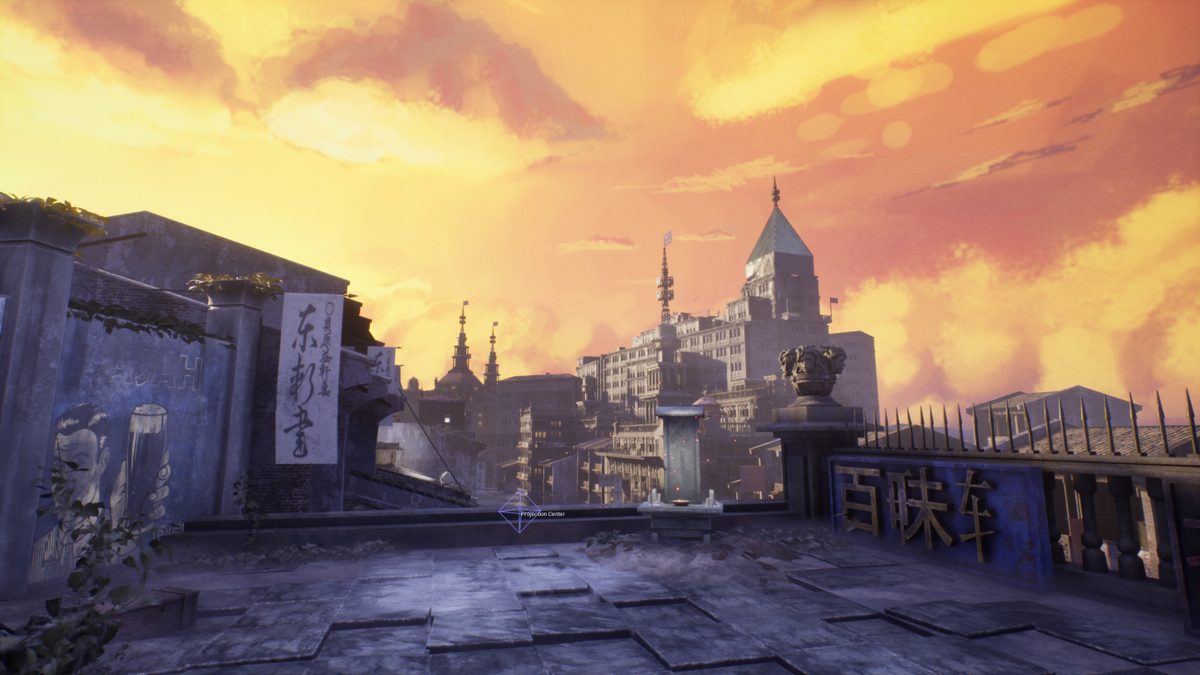
Rooftops of 1920s Shanghai at sunset, a scene from La poussière du Bund

Pitch

Explore a 1920s Shanghai as Ying Zhu, a young factory worker capable of infiltrating thanks to her mastery of dust, granting her superhuman agility and allowing her to alter the vision of her enemies.

Context

During my last year at LISAA, we had an interdisciplinary project where we had 9 months to conceptualize and create the vertical slice of an original game. This is the biggest project I’ve ever been part of.

My work

  • Designed and prototyped the core gameplay in Blueprints (3C, main abilities, enemies, detection system).
  • Created 2/3 of the level in block-out (layout, enemy placement, collectibles) and helped integrate the assets.
  • Integrated part of the UI in Blueprints (detection indicator, dust bar, abilities indicator).
  • Designed several ability upgrades, implemented by my teammate.
  • Created the save system (best times, levels unlocked, collectibles found).
  • Wrote and updated documentation.

Game design

My main goal when creating the core gameplay was to avoid forcing the player to be slow and passive. First because we didn’t have time to create realistic AI or interactive maps, and second because we thought it wouldn’t feel special. Instead, we encouraged the player to be fast and constantly active.

We achieved this by giving the player great mobility, abilities to alter enemy vision, and by designing scenarios where using powers is mandatory (the player couldn’t progress just by waiting for enemies to pass).

The result is a less methodical stealth game than usual but a far more intense one, with fast-paced gameplay where the player feels agile and invisible. Reflexes and quick thinking are rewarded without punishing slower-paced casual players.

Time Sensitive Investigation

Vertical slice · Unreal Engine 5 · Team of 14
RoleGame Designer, Puzzle Designer
Team14 people (5 GD, 6 GA, 3 TA)
Duration3 months
GenreInvestigation, puzzle
PlatformPC
EngineUnreal Engine 5
PlayersSolo
Content1 level (30 min)

Watch on YouTube

Pitch

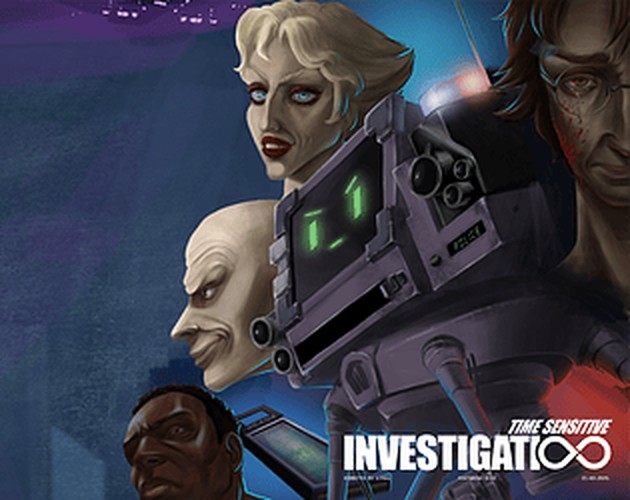
Time Sensitive Investigation is an escape game that immerses you in a story blending murder, mystery, and mega-corporation! Play as a metal detective capable of analyzing crime scenes across two different timelines! Use your time-traveling abilities to solve a thrilling investigation in this puzzle-filled escape game.

Context

During my second year at LISAA, we had an interdisciplinary project where we had 3 months to conceptualize and create the vertical slice of an original game. Each group had different constraints imposed. For ours, it had to be an escape game with a top-down camera.

Capture d’écran de Time Sensitive Investigation

My work

  • Designed 3 puzzles and implemented one in Blueprints (Simon puzzle).
  • Updated and managed the Game Design Document (3C, game loop, puzzle guide).
Second screenshot of Time Sensitive Investigation

Puzzles

When designing puzzles, my main goal was to find interesting ways to use the time travel mechanic to solve them, because we wanted it to be at the center of the experience and to be more than a gimmick. To do so, each puzzle requires the player to switch between timelines to find clues and items that are present in only one of them.

The challenge was also to find believable and unique scenarios to include in a small apartment (clean in the past, damaged in the present), within a semi-realistic cassette-punk universe. We approached this by designing the puzzles first, ensuring the apartment would have enough space and an appropriate layout.

Conclusion

This project was very interesting to work on because it was the first time I had worked with such a large team, so I learned a lot about teamwork and communication. I’m also satisfied with the work I was able to produce on a type of game I wasn’t familiar with.

SWING!

2D arcade game · Unity · Team of 2
RoleGame Designer, Level Designer (+UI/HUD)
Team2 people
Duration2 months
GenreDie and retry, 2D platformer, one-button game
PlatformBrowser
EngineUnity
PlayersSolo
Content3 short levels (30–50 s)
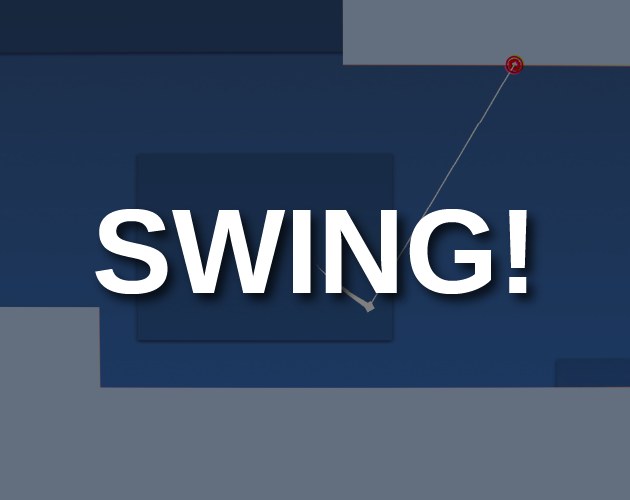
SWING! gameplay screenshot

Pitch

SWING! is a simple but challenging 2D platformer where you have to swing a cube through increasingly tricky levels without hitting any obstacles!

Context

During my first year at LISAA, we had a project to create a one-button game in groups of 2 over 2 months. It was up to us to organize ourselves to conceptualize and then program the game.

SWING! level screenshot

My work

  • Designed the swing mechanic (concept and rules); implementation by my teammate.
  • Created 3 levels (easy, medium, hard) with a progressive difficulty curve.
  • Implemented menus and HUD (timer, progress bar).
SWING! HUD with timer and progress bar

Game design

My main goal for the game was to design an easy-to-understand core mechanic with a great learning curve, to encourage the player to keep playing to improve. The challenge comes from mastering swing timing and swing length, while managing speed to achieve the best time without losing control.

Level design

Because the game is checkpoint-less, I kept levels short (30–50 s) to make failure less frustrating and encourage repetition. The HUD (timer and progress bar) supports this mastery loop by making progress and “almost made it” moments immediately visible.

Conclusion

This was the first game I ever created, so I’m happy with the result and I learned a lot during this project. The main challenges were first finding a game concept that wasn’t too simplistic despite the control constraints, and then achieving a good gameplay feel to make the game enjoyable from the very first seconds.

Wits & Wizards

Board game · Team of 6
RoleGame Designer
Team6 people
Duration3 months
GenreCard-based board game, MOBA
Players4–6
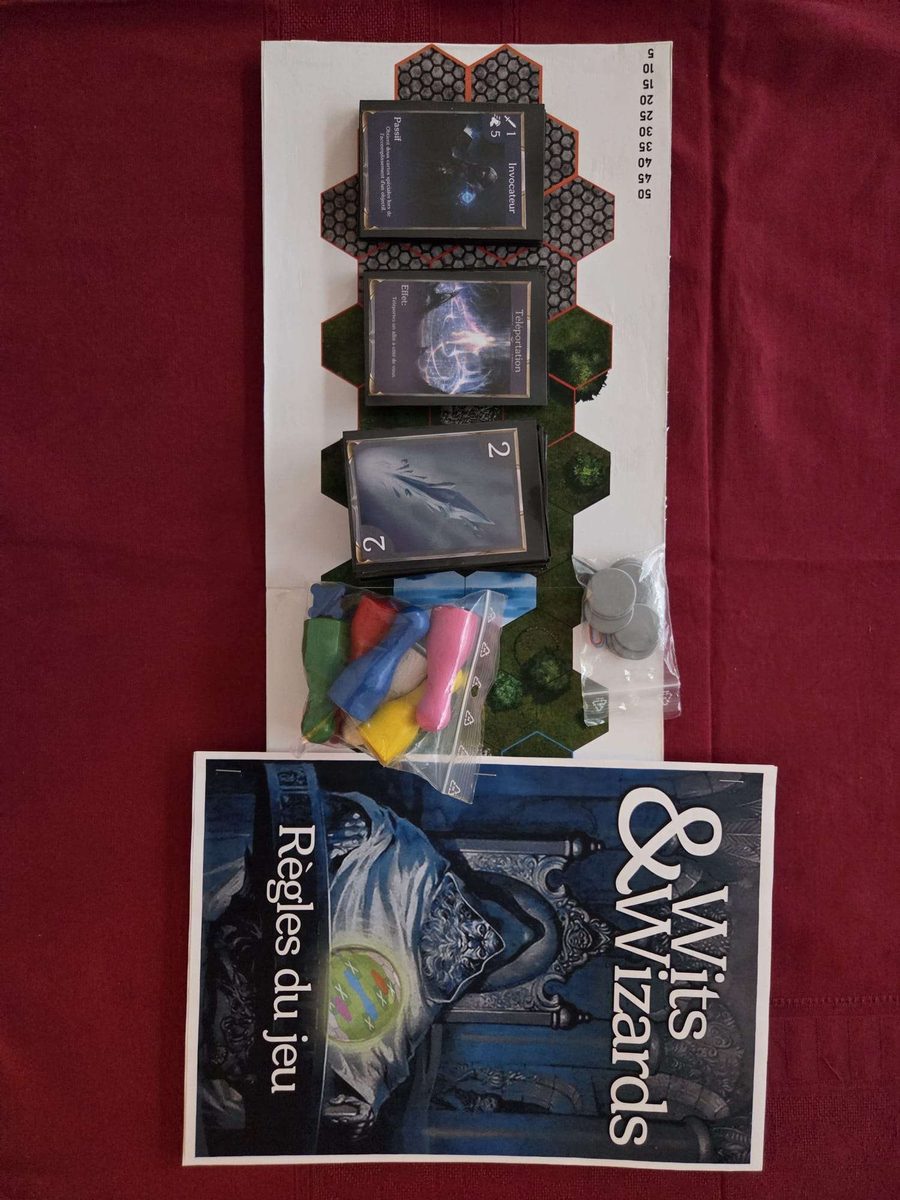
Board, cards and rulebook of Wits & Wizards

Pitch

Wits & Wizards is a board game in which two teams of three players battle to destroy the opposing team’s base.

Teams are composed of three unique roles: Support, Tank, and Damage, each with its own abilities and characteristics.

Win and collect combination cards throughout the game and spend them in combat to defeat your opponents.

The outcome of battles is determined by the strength of each player’s hand, as well as their own abilities and those of their allies.

Context

During my second year at LISAA, we had three months to create a board game inspired by the MOBA genre. In addition to conceptualizing the game, we also had to organize ourselves to create a playable prototype.

My work

  • Created the game pitch (concepts and rules).
  • Designed various characters, each with their own unique roles and abilities.
  • Balanced the game by making numerous adjustments to the power levels of each character and the different systems.
  • Wrote the rulebook, summarizing and reformulating the rules defined by the group and adding diagrams to make them easier to understand.

Game design

For the game concept, I suggested to my group that we create a MOBA using poker hand rankings as our combat system. My reasoning was that none of us were MOBA or board game experts, so it was best to create a relatively simple game to avoid making it too complex for our skill level.

The biggest challenge was balancing the game (card size, movement speed, health points) between making it accessible to everyone and keeping the level of strategy expected from a MOBA. Simplify it too much and it becomes a luck-based game, but add too many rules and the pacing and experience suffer. This process was slow and took many playtests and iterations, but in the end we delivered the game in a good state.

Conclusion

Not being a board game expert, I’m happy with the result we achieved on this project. It was a lot of fun to work on because the lack of coding constraints allowed us to be very creative and to test each iteration easily. My only regret is that I wish we had had more time to balance the game.